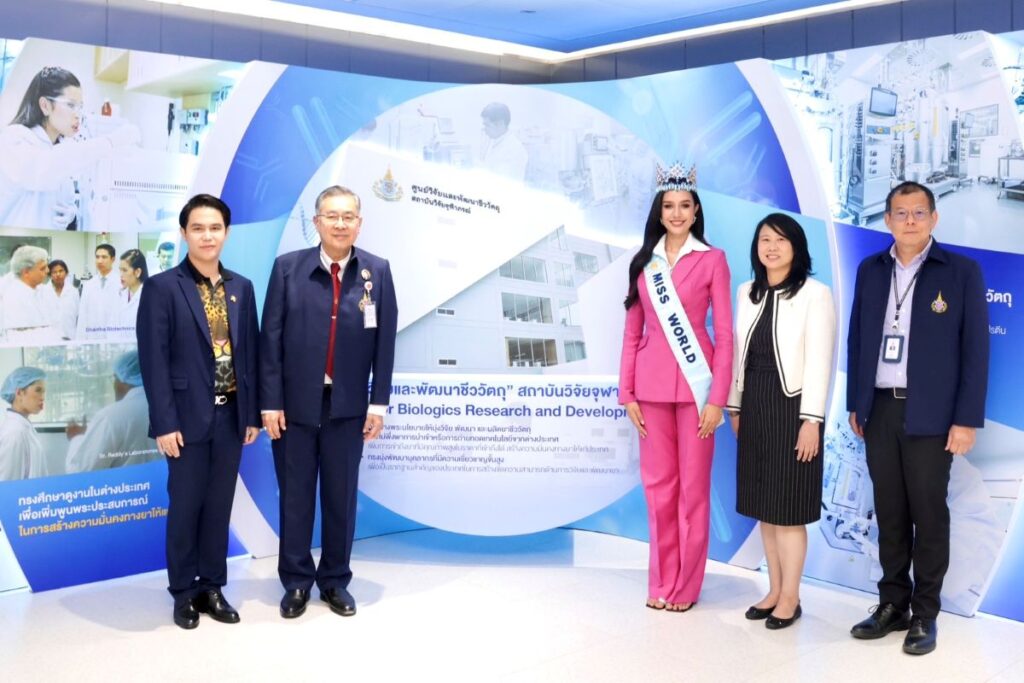
On August 14, 2025 at 2.45 p.m., Mr. Surapit Kirtiputra, Vice President for International Relations, Chulabhorn Research Institute (CRI), along with Assoc. Prof. Dr. Mayuree Fuangthong, Research Scientist II, Dr. Chalermchai Artpradit, Research Scientist I, a team of researchers at the CRT, and Asst. Prof. Dr. Soranat Raibhu, Engineering High Level Expert, welcomed Ms. Suchata “Opal” Chuangsri, Miss World 2025, on the occasion of her visit to the Center for Biologics Research and Development (CBRD), CRI. The purpose of her visit was to learn about the operations of the CBRD and its progress in R&D and production of drugs for cancer treatment. The CBRD is fully equipped with infrastructure, technology, and operational systems and is the first center in Thailand to successfully support the comprehensive development process of biologics. The Center for Biologics Research and Development (CBRD) was established to fulfill the vision of Professor Dr. Her Royal Highness Princess Chulabhorn Mahidol, President of the CRI. For over two decades, Her Royal Highness laid the foundation of an “Ecosystem for biologics development”, encompassing R&D laboratories and biologics production facilities and a laboratory animal center for initial efficacy and safety testing. The CBRD has also fostered cooperation with the Chulabhorn Graduate Institute, the Chulabhorn Hospital, and networks of international researchers to implement Her Royal Highness’s policies to the best of their...
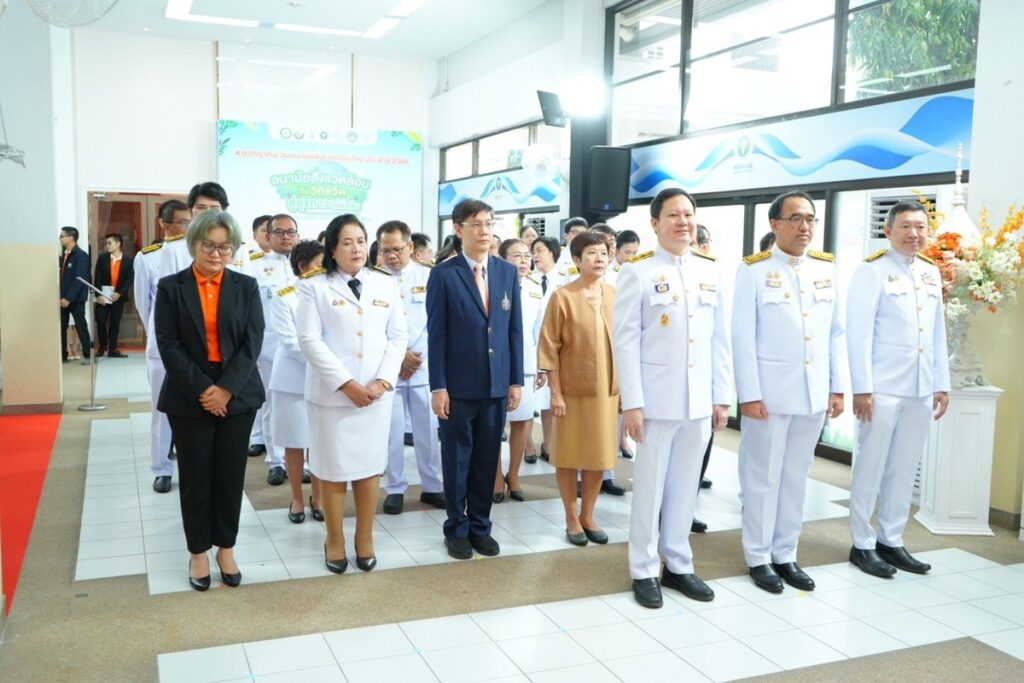
By Royal Permission of Professor Dr. Her Royal Highness Princess Chulabhorn Mahidol, July 4– Her Royal Highness’s Birthday Anniversary – has been designated as Thai Environmental Health Day. On July 4, 2025, Dr. Poonsakdi Ploypradith, Assistant Director and Expert Scientist, Office of Research, Chulabhorn Research Institute (CRI), represented the CRI at the opening ceremony of Thai Environmental Health Day. This year, the Department of Health, Ministry of Public Health, organized the event under the theme “Environmental Health for Healthy Lifestyles and Sustainable Well-Being”. The event aimed to encourage network organizations among public, the private, and community sectors, to recognize the importance of cooperation in environmental health based on the application of appropriate technologies and innovations. These efforts seek to prevent and reduce any potential impacts of rapid environmental changes on people’s livelihood, ultimately contributing to the long-term goal of sustainable development of environmental health. As part of the event, Dr. Punyawee Dulyayangkul, Miss Thitima Srathongneam, and Miss Suleepon Poomchuchit, representing researchers from the CRI’s Laboratory of Biotechnology, organized an exhibition showcasing ongoing research projects conducted by the Laboratory to address antimicrobial resistance issues in a sustainable manner. Their research work includes studies on the mechanisms and contributing factors of antimicrobial resistance, studies and development of indicators for identifying pollutant-contaminated water, and the management of antibiotics and toxic substances in water...
Professor Dr. Her Royal Highness Princess Chulabhorn Mahidol has achieved a groundbreaking milestone in the research, development, and production of a “trastuzumab” biosimilar used in cancer treatment. From upstream to downstream processes, this innovation was accomplished entirely by Thai researchers without relying on foreign technology transfer. It marks Thailand’s first biosimilar developed domestically for the benefit of the Thai people. The drug officially named “HERDARA” was granted registration license from the Food and Drug Administration, Ministry of Public Health, on May 20, 2025. It is generally known that cancer remains the number one cause of death in Thailand and tends to increase while the medicines to treat the disease are expensive as they have to be imported. With Her vision to address health issues of the Thai people, Her Royal Highness has tirelessly committed to Thailand’s medical and public health development. Recognizing people’s difficulties in having access to very expensive biologics efficient in treating diseases, especially cancer, Her Royal Highness has taken the initiative and laid the foundation to develop biologics domestically under the Project “Center for Biologics Research and Development”. Her Royal Highness directed researchers at the Chulabhorn Research Institute (CRI) to brainstorm for the invention and development of biosimilars that meet international standards and ensure therapeutic efficacy. These efforts not only enhance national self-reliance in biologic medicines but...
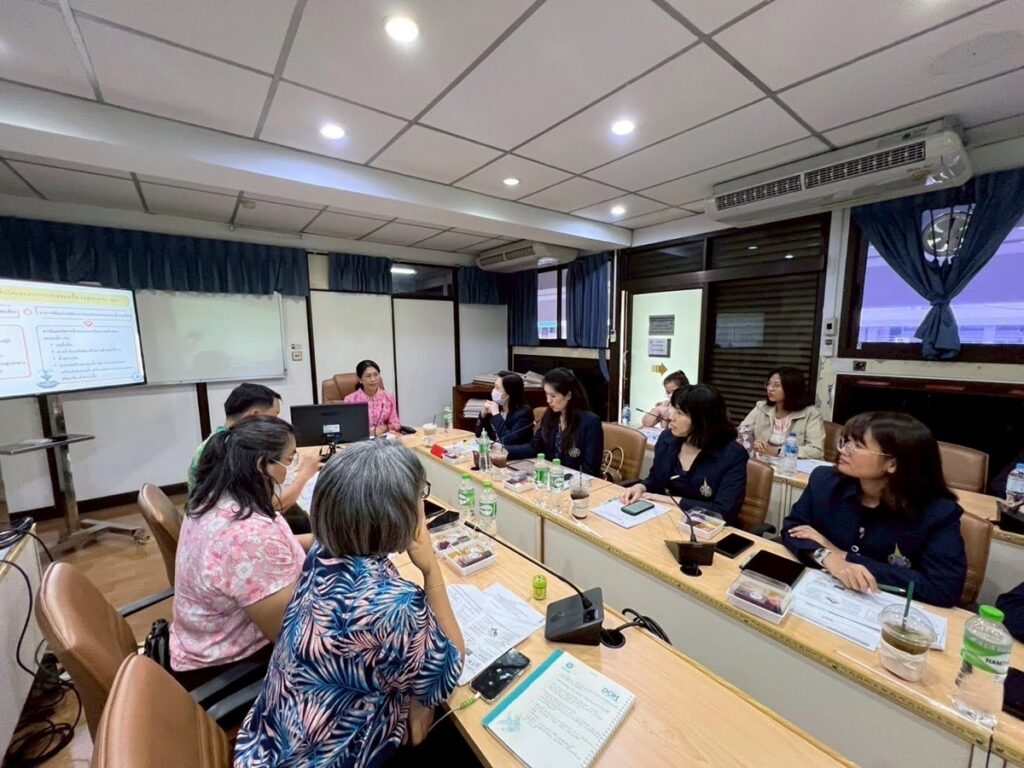
On Thursday, April 10, 2025, a team of researchers from the Laboratory of Biotechnology, Chulabhorn Research Institute, consisting of Dr. Kwanrawee Sirikanchana and Assoc. Prof. Dr. Rojana Sukchawalit, Research Scientists II, Miss Thitima Srathongneam and Miss Benya Nontaleerak, Research Scientists, as well as Mr. Phongsawat Paisantham, Assistant Researcher, attended a hearing on proposals to improve the Notification of the Department of Health on the Act to Control Legionella in Cooling Towers in Buildings in Thailand B.E. 2544 (2001), organized by the Bureau of Environmental Health, Department of Health. The event was held from 1.30-4.30 p.m. at the Chid Chaiyawong Meeting Room, Building 5, 5th Floor, Department of Health. During the hearing, the CRI research team presented a set of proposals aimed at improving the Notification based on studies, reviews, and analyses of academic information, as well as recommended a guideline for the management of environmental health to control Legionella in buildings so that the Notification is up-to-date and appropriate for current situations and technology. These proposals presented in the hearing also supported the drafted suggestions of the Public Health Committee on the guideline for the management of environmental health to prevent and control Legionella in various business establishments. In support of these efforts, the CRI has prepared a manual on the management of environmental health to control Legionella in buildings...
Researchers at the Chulabhorn Research Institute (CRI) received the National Research Awards 2025, graciously bestowed upon by Her Royal Highness Princess Maha Chakri Sirindhorn on Thailand Inventors’ Day 2025, organized by the National Research Council of Thailand (NRCT), Ministry of Higher Education, Science, Research and Innovation (MHESI) on February 2, 2025 at Bangkok International Trade & Centre, Bangna, Bangkok. On this occasion, Dr. Piyachat Chuysinuan, Research Scientist II at the Laboratory of Organic Synthesis, CRI, was awarded the National Research Awards 2025: Research Work Award (Good Level) in the field of Medical Sciences for her research titled “Development of Injectable Alginate/ Silk fibroin/Hydroxyapatite Composite Hydrogels for Dental Tissue Engineering”. It has been found that an increasing number of patients in Thailand, especially the elderly, are losing their teeth. Dental implants replacing natural teeth have become one of the most popular methods of treatment. However, the problem mostly found is that the patients do not have complete or sufficient alveolar bones to support dental implants. Treatment therefore requires an additional step of alveolar bone grafting, which often depends on imported materials which are expensive, and therefore inaccessible to most patients who then risk losing their teeth permanently. The research team developed new medical materials for use in dental tissue engineering. Basically, the process involved synthesizing materials from natural raw sources readily...
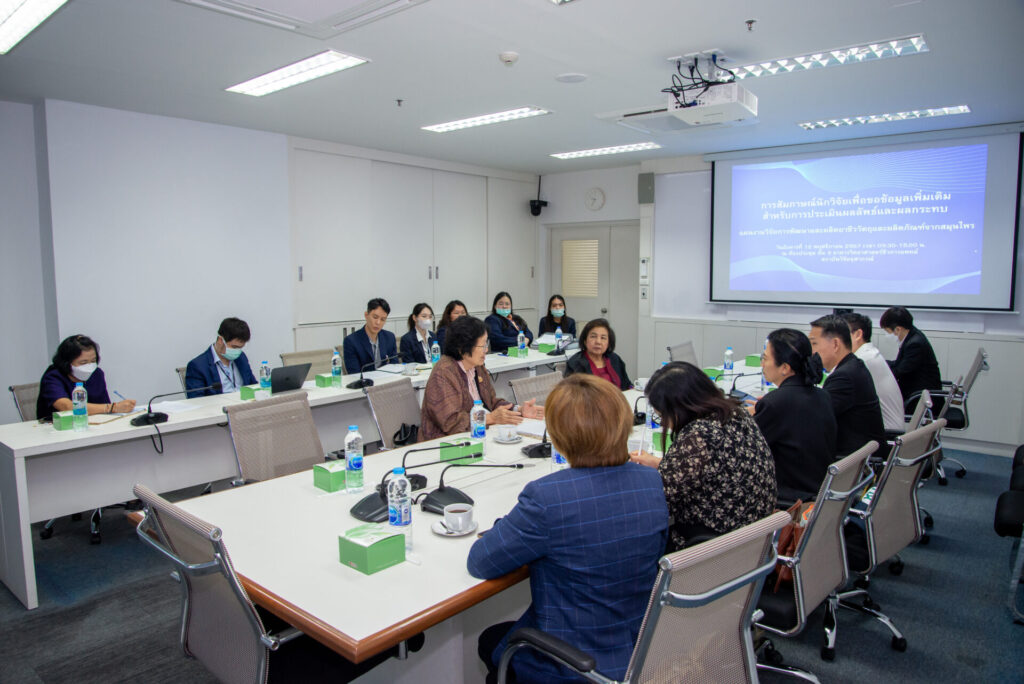
Pursuant to the meeting to discuss the evaluation of the outcomes and impacts of large-scale research and innovation programs between the Chulabhorn Research Institute (CRI), Thailand Science Research and Innovation (TSRI), and a team of evaluators from the Center for Applied Economics Research, Kasetsart University, on September 11, 2024 in the R117 Meeting Room of the Chemistry Research Building at the CRI, the CRI was selected by the TSRI to be evaluated for its programs on the R&D and production of biologics and herbal products under the scope of research conducted during fiscal years 2021-2022. Progress has since been made on the subject. On November 12, 2024, a team of evaluators from the Center for Applied Economics Research, Kasetsart University, led by Asst. Prof. Visit Limsombunchai Ph.D., Dean, Economics Faculty, Kasetsart University, and a delegation, visited the CRI to interview researchers involved in the research projects under the research programs to gather additional information for evaluating the outcomes and impacts of the programs. The delegation was welcomed by Assoc. Prof. Dr. Jutamaad Satayavivad, Vice President for Scientific Affairs and Assoc. Prof. Nardtida Tumrasvin, Director, Office of Research, CRI. The interview took place in the B901D Meeting Room of the Biomedical Science Building at the CRI. On this occasion, Dr. Nuchanart Rangkadilok, Assoc. Prof. Dr. Mayuree Fuangthong, Research Scientists II, Dr....
Attention has been drawn to recent reports circulated widely on social media and online news outlets concerning a Thai scholar who allegedly purchased research works and had them published in academic journals. The case may have led the public to mistakenly believe that the individual in question is affiliated with the Chulabhorn Research Institute (CRI). The CRI would like to clarify that the scholar mentioned was neither a researcher nor an employee of the CRI. Furthermore, the CRI had no involvement in the publication of the research works in question. The CRI totally disapproves any practice involving the purchase of authorship for the sole purpose of gaining credit in a published work. Such actions constitute a blatant violation of disciplines and ethical standards in the research circle. The Chulabhorn Research Institute has always adhered to the researcher ethics and practices, as set forth by the National Research Council of Thailand, with strict ethics in conducting research and disseminating research findings at the international level. This clarification is issued to provide accurate information to the public and prevent any misunderstanding that could potentially harm the CRI’s reputation and tarnish its esteemed image. Chulabhorn Research Institute January 12, 2023
The new study, in establishing the potential harmful effects of prenatal exposures, provides a possible method of screening populations to detect signs of arsenic contamination. Moreover, it is the first study to provide evidence of genome-wide changes resulting from prenatal exposure from any environmental contaminant. In a collaborative study, researchers at the Chulabhorn Research Institute (CRI) in Thailand and of the Massachusetts Institute of Technology (MIT) in the United States have found that the children of mothers exposed to water supplies contaminated with arsenic during their pregnancies showed gene expression changes that could lead to cancer and other diseases later in life, even if the children themselves were never directly exposed to arsenic. The new study, in establishing the potential harmful effects of prenatal exposures, provides a possible method of screening populations to detect signs of arsenic contamination. Moreover, it is the first study to provide evidence of genome-wide changes resulting from prenatal exposure from any environmental contaminant. Arsenic contamination is a health concern worldwide with millions exposed to levels that exceed the World Health Organization (WHO) safety standard of 10 parts per billion (ppb). The element was classified as a Group 1 carcinogen by the International Agency for Research on Cancer (IARC) and has been implicated in such diseases as vascular disorders and diabetes. The CRI research team included...
We use cookies to improve performance. and good experience using your website. You can study details at Cookies policy and can manage your own privacy by clicking on Settings
Necessary cookies are absolutely essential for the website to function properly. These cookies ensure basic functionalities and security features of the website, anonymously.
Analytics
Analytical cookies are used to understand how visitors interact with the website. These cookies help provide information on metrics the number of visitors, bounce rate, traffic source, etc.